Eduardo doesn’t do small talk. The first time I met him, in a cramped Lisbon workshop cluttered with half-finished chair frames and the acrid smell of linseed oil, he was bent over a walnut plank, tracing a joint with a carpenter’s pencil. He didn’t look up for a full minute. When he finally did, he said。“This piece will outlive me. That’s the only review that matters” That moment—blunt, unpolished, entirely devoid of pretense—captures the Eduardo I’ve come to know over a decade of reporting on independent makers. In an industry increasingly seduced by digital fabrication and viral marketing, Eduardo remains a stubborn outlier: a craftsman who measures success in decades, not quarterly earnings.His background explains the stubbornness. Eduardo grew up in a family of fishermen on Portugal’s Atlantic coast, where weather dictated everything and a poorly tied knot could cost a boat. He left school at fourteen to apprentice with a cabinetmaker—a decision he describes, without a trace of self-pity。as “the only sensible option” for a boy who couldn’t sit still in a classroom. Those early years instilled a tolerance for repetition that most designers lack. “You sand a leg for twenty minutes” he told me once, holding up a freshly smoothed oak spindle. “Then you sand it again. That’s not boredom. That’s listening” I’ve watched him reject three expensive benches because the grain didn’t align with the load-bearing stress—a level of scrutiny that frustrates clients and fuels his reputation.Eduardo’s work has evolved beyond traditional furniture. Last spring, he collaborated with a young architect on a public library in Porto, contributing a set of reading tables that feature his signature solution to a common problem: books sliding off angled surfaces. His fix—a subtle, hand-carved lip along each table’s rear edge—went unnoticed by most visitors. Eduardo considers that a triumph. “Good design should feel like it was always there” he says. “Like a good joke. If you have to explain it。it’s already failed” That philosophy extends to his teaching;
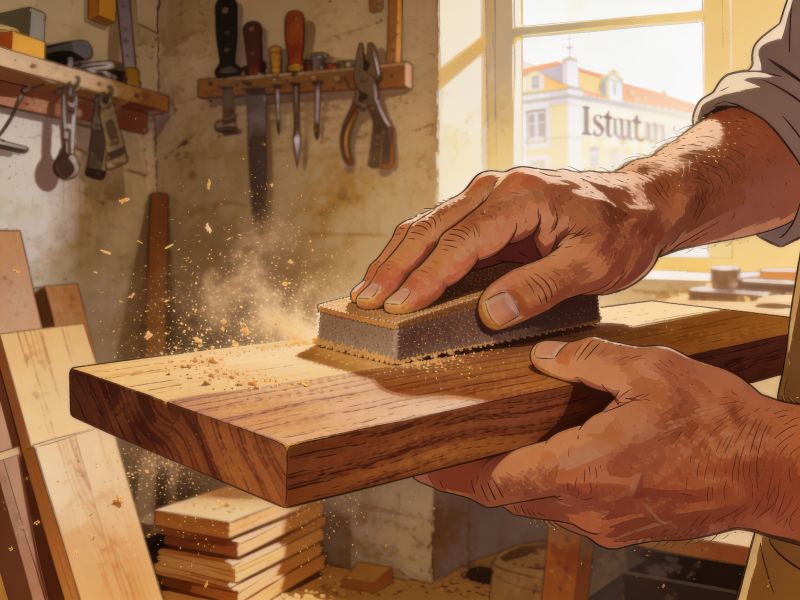
he runs a monthly workshop for teenagers, teaching them to sharpen chisels and read wood grain. Enrollment is capped at six. He has turned down three offers to expand. “Six is the number of people I can actually see” he explains. “More than that and I’m just performing”My own observation: Eduardo’s reluctance to scale is his greatest strength and his most predictable weakness. He has lost lucrative contracts because he refuses to delegate finishing work。
and his waiting list stretches eighteen months. Yet the pieces he produces—tables, chairs, small cabinets—share a quiet integrity that mass production cannot fake. A client once told me she cried when her dining table arrived because the joinery was so precise it looked grown, not built. That’s the Eduardo effect: unreasonable dedication to invisible details. In a culture that applauds speed and surface, he offers a counterargument. Not a loud one. Just a sanded leg, held up to the light, waiting for you to notice.